
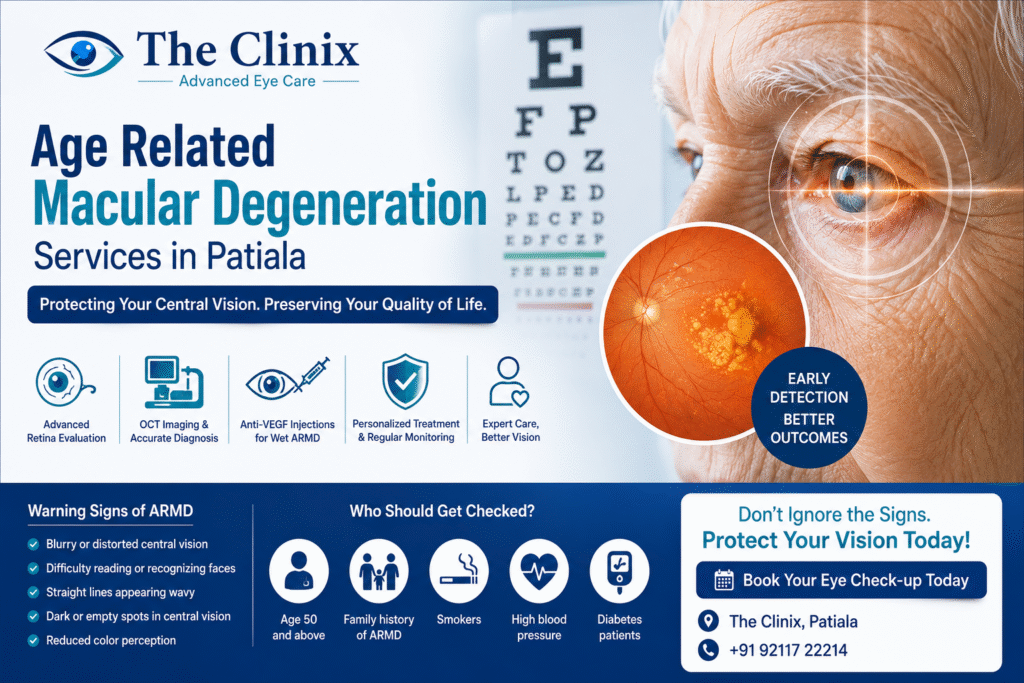
Vision is one of the most valuable gifts we have, yet many eye conditions can silently threaten it without noticeable symptoms in the early stages. One such condition is Age-Related Macular Degeneration (ARMD), a leading cause of vision loss among older adults worldwide. ARMD primarily affects the macula, the central part of the retina responsible for sharp vision needed for reading, driving, recognizing faces, and performing everyday activities.
If you are searching for Age Related Macular Degeneration Services in Patiala, early diagnosis and expert retina care can make a significant difference in protecting your eyesight. At The Clinix, patients receive comprehensive retina evaluations and personalized treatment plans aimed at preserving vision and maintaining quality of life.
What Is Age-Related Macular Degeneration (ARMD)?
Age-Related Macular Degeneration is a retinal disease that affects the macula, the most sensitive part of the retina. The macula enables us to see fine details clearly and perform tasks that require sharp central vision.
As the disease progresses, patients may experience distortion, blurriness, or dark spots in the center of their vision. While ARMD usually does not cause complete blindness, it can severely affect a person’s ability to perform daily activities independently.
ARMD is more common in individuals over the age of 50 and becomes increasingly prevalent with advancing age.
Understanding the Macula and Its Importance
The retina is a light-sensitive tissue located at the back of the eye. It captures images and sends visual signals to the brain.
The macula is the central portion of the retina and is responsible for:
- Reading
- Recognizing faces
- Driving
- Watching television
- Using smartphones and computers
- Seeing fine details
When the macula becomes damaged due to ARMD, central vision is affected while peripheral vision often remains intact.
Types of Age-Related Macular Degeneration
Dry ARMD
Dry ARMD is the most common form of the disease.
It occurs when small deposits called drusen accumulate beneath the retina and gradually damage macular cells.
Characteristics include:
- Slow progression
- Gradual vision changes
- Mild to moderate central vision loss
- Difficulty reading and recognizing faces
Although progression is usually slow, regular monitoring is essential.
Wet ARMD
Wet ARMD is less common but more serious.
This condition occurs when abnormal blood vessels grow beneath the retina and leak blood or fluid.
Symptoms may develop suddenly and include:
- Rapid vision loss
- Distorted vision
- Dark spots in central vision
- Straight lines appearing wavy
Wet ARMD requires prompt medical attention because untreated cases can lead to significant and permanent vision loss.
Risk Factors for ARMD
Several factors increase the likelihood of developing Age-Related Macular Degeneration.
Age
The risk increases significantly after the age of 50.
Family History
Individuals with a family history of ARMD may have a higher risk.
Smoking
Smoking is one of the most important modifiable risk factors associated with macular degeneration.
High Blood Pressure
Poor cardiovascular health can contribute to retinal damage.
Obesity
Excess body weight may increase the risk of disease progression.
Prolonged Sun Exposure
Long-term ultraviolet light exposure may affect retinal health.
Poor Diet
A diet lacking essential vitamins and antioxidants may increase susceptibility.
Symptoms of Age-Related Macular Degeneration
The symptoms often vary depending on the stage and type of ARMD.
Common warning signs include:
- Blurred central vision
- Distorted or wavy lines
- Difficulty reading
- Difficulty recognizing faces
- Dark or empty spots in central vision
- Reduced color perception
- Need for brighter light while reading
Many patients initially ignore these symptoms because changes may occur gradually.
Why Early Detection Is Important
One of the biggest challenges with ARMD is that patients may not realize vision changes until significant retinal damage has already occurred.
Early detection offers several advantages:
- Timely treatment
- Better visual outcomes
- Slower disease progression
- Improved quality of life
- Preservation of functional vision
Routine retina examinations are especially important for individuals above 50 years of age.
Diagnosis of Age-Related Macular Degeneration
Accurate diagnosis requires a comprehensive retina evaluation performed by an experienced eye specialist.
Detailed Eye Examination
A comprehensive eye examination helps assess retinal health and identify early changes.
Dilated Retina Examination
Special eye drops are used to enlarge the pupils and allow detailed retinal assessment.
Optical Coherence Tomography (OCT)
OCT is an advanced imaging technology that provides detailed cross-sectional images of the retina.
It helps identify:
- Fluid accumulation
- Retinal swelling
- Macular abnormalities
- Disease progression
Fundus Photography
Retinal photographs help document changes and monitor progression over time.
Fluorescein Angiography
This specialized test may be used to evaluate abnormal blood vessel growth in wet ARMD.
Treatment Options for ARMD
Treatment depends on the type and severity of the disease.
Management of Dry ARMD
Although there is currently no cure for dry ARMD, several strategies may help slow progression.
These include:
- Regular retina monitoring
- Nutritional support
- Healthy lifestyle modifications
- Smoking cessation
- Blood pressure control
Early detection remains essential for preserving vision.
Treatment of Wet ARMD
Wet ARMD often requires more active intervention.
Intravitreal Injections
Anti-VEGF injections are commonly used to reduce abnormal blood vessel growth and leakage.
Benefits include:
- Stabilization of vision
- Reduced retinal swelling
- Improved visual outcomes
- Prevention of further damage
The treatment schedule varies based on the patient’s condition and retinal response.
Regular Monitoring
Patients undergoing treatment require periodic retina examinations and imaging studies to monitor progress.
Lifestyle Tips to Protect Your Macular Health
Maintaining healthy habits can support retinal health and reduce risk factors associated with ARMD.
Eat a Nutrient-Rich Diet
Include foods rich in:
- Leafy green vegetables
- Fruits
- Fish rich in omega-3 fatty acids
- Nuts and seeds
- Antioxidants
Avoid Smoking
Quitting smoking can significantly reduce the risk of disease progression.
Control Blood Pressure
Good cardiovascular health supports healthy retinal circulation.
Wear UV-Protective Sunglasses
Protecting the eyes from excessive sunlight may help preserve retinal health.
Schedule Regular Eye Examinations
Routine eye checkups are one of the most effective ways to detect retinal diseases early.
Why Choose The Clinix for Age Related Macular Degeneration Services in Patiala?
When searching for Age Related Macular Degeneration Services in Patiala, choosing an experienced retina care provider is essential.
At The Clinix, patients benefit from:
Comprehensive Retina Evaluation
Advanced diagnostic technologies help detect retinal conditions accurately and at an early stage.
Personalized Treatment Plans
Every patient receives individualized care based on their retinal condition and visual needs.
Advanced Imaging Technology
Modern retinal imaging allows precise diagnosis and monitoring.
Expert Retina Care
Specialized retina services focus on preserving vision and improving outcomes.
Patient-Centered Approach
The Clinix emphasizes education, preventive care, and long-term retinal health management.
When Should You Consult a Retina Specialist?
You should schedule an eye examination immediately if you notice:
- Sudden vision distortion
- Blurred central vision
- Dark spots in vision
- Difficulty reading
- Straight lines appearing bent or wavy
- Unexplained changes in eyesight
Prompt evaluation can help identify retinal conditions before they cause permanent damage.
Conclusion
Age-Related Macular Degeneration is a serious retinal disease that can significantly affect central vision and daily life. However, early diagnosis, regular monitoring, and timely treatment can help preserve eyesight and maintain independence.
If you are looking for trusted Age Related Macular Degeneration Services in Patiala, The Clinix offers comprehensive retina care, advanced diagnostic technology, and personalized treatment solutions designed to protect your vision.
Regular retina examinations become increasingly important with age. If you notice any changes in your vision or are over 50 years old, schedule a retina evaluation and take a proactive step toward safeguarding your eyesight for the future.