
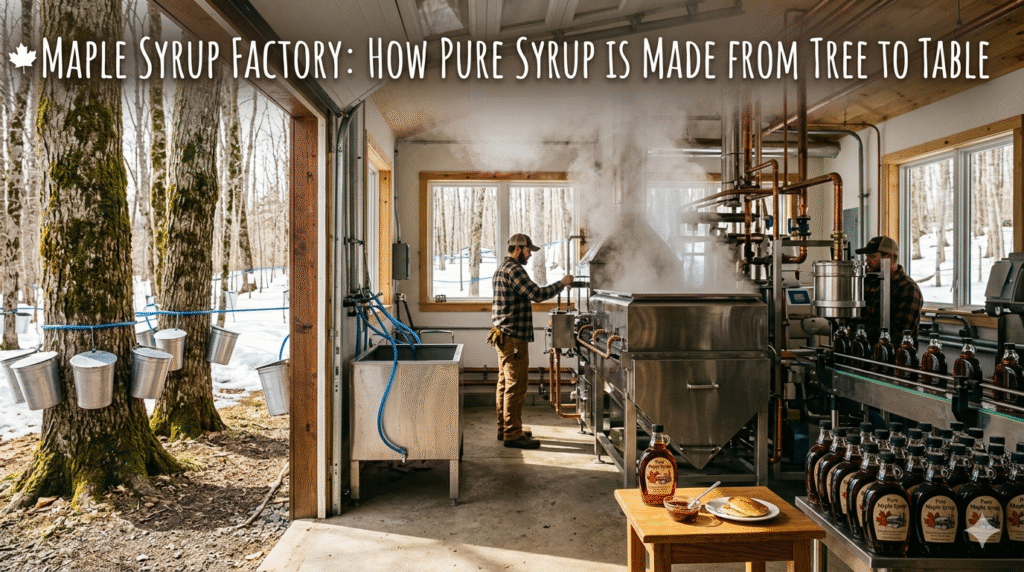
In the world of natural sweeteners, few products carry as much tradition and craftsmanship as maple syrup. Behind every bottle on a breakfast table is a careful, seasonal process that depends on climate, timing, and skilled production methods. A modern maple syrup factory is not just a processing facility—it is a place where agriculture, science, and heritage come together to create one of nature’s most prized foods.
Understanding how maple syrup is made helps consumers appreciate its value beyond sweetness. Unlike refined sugar, maple syrup is harvested from living trees, primarily sugar maples, and requires a delicate balance of tapping, collecting, and boiling sap without compromising quality. For producers, even small mistakes in timing or temperature can significantly affect flavor, color, and yield.
At the same time, demand for pure maple syrup continues to rise globally. Consumers are increasingly seeking natural, minimally processed foods, making efficient yet traditional syrup production more important than ever. This has pushed modern syrup facilities to blend old-world methods with advanced technology while preserving authenticity.
What is a Maple Syrup Factory and How It Operates
A maple syrup factory is a specialized production site where raw sap from maple trees is transformed into syrup through controlled heating and filtration. Unlike typical food processing plants, these facilities are highly seasonal and operate mainly during late winter and early spring when temperatures fluctuate between freezing at night and thawing during the day.
The process begins in nearby maple forests where trees are tapped. The collected sap is then transported to the factory for immediate processing, as freshness is critical. Sap is mostly water with a small percentage of natural sugar, so it must be concentrated significantly before it becomes syrup.
Inside the factory, large evaporators and filtration systems are used to remove excess water while preserving natural flavors. Skilled operators monitor temperature, density, and color grades to ensure consistency. Many factories also follow strict quality standards, ensuring the final product meets food safety regulations while maintaining traditional taste profiles.
Modern facilities often integrate stainless steel tubing systems, reverse osmosis machines, and automated bottling lines. However, even with technological advancements, the core principle remains unchanged: carefully reducing sap into syrup without burning or over-processing it.
Step-by-Step Guide to Maple Syrup Production
The transformation from tree sap to finished syrup involves several precise stages. Each step plays a crucial role in determining the final quality, flavor, and texture.
1. Tapping the Maple Trees
The process begins by drilling small holes into mature sugar maple trees. These holes are fitted with spouts or taps that allow sap to flow out naturally. Timing is essential—tapping usually occurs in late winter when nights are below freezing and days are warmer. This temperature variation creates pressure inside the tree, pushing sap outward.
Each tree can produce sap for several weeks, but over-tapping or improper drilling can damage the tree. Responsible producers follow sustainable harvesting practices to ensure trees remain healthy for future seasons.
2. Collecting and Transporting Sap
Once sap begins flowing, it is collected in buckets or transported through tubing systems that connect multiple trees to a central collection point. In modern operations, vacuum-assisted tubing systems improve efficiency and reduce contamination risks.
The sap is then transported quickly to the maple syrup factory. Because raw sap can spoil within hours, maintaining cleanliness and temperature control during transport is critical. Any delay or contamination can affect the final syrup quality.
3. Boiling and Evaporation
At the factory, sap is poured into large evaporators where it is boiled at high temperatures. This step removes most of the water content, concentrating the natural sugars. It takes roughly 40 liters of sap to produce just 1 liter of syrup, highlighting the product’s rarity and value.
Operators carefully control boiling temperatures to avoid burning the sugar. Even slight overheating can result in a bitter taste or darkened color. As water evaporates, steam is released, and the liquid gradually thickens into syrup.
4. Filtration and Grading
Once the syrup reaches the desired density, it is filtered to remove natural impurities such as sugar sand or mineral deposits. This ensures a smooth texture and clean finish.
After filtration, syrup is graded based on color and flavor intensity. Lighter syrups generally have a milder taste, while darker syrups offer a stronger, more robust flavor. Grading helps consumers choose products based on personal preference.
5. Bottling and Packaging
The final stage involves heating the syrup slightly before bottling to ensure sterilization. It is then sealed in glass or food-safe containers. Proper packaging preserves freshness and extends shelf life without the need for artificial preservatives.
Common Mistakes and Challenges in Syrup Production
Despite its traditional roots, maple syrup production is not without challenges. One common mistake is improper timing during the tapping season. If trees are tapped too early or too late, sap yield decreases significantly.
Another issue is inconsistent boiling temperatures. Overheating can destroy delicate flavor compounds, while underheating results in thin, watery syrup that does not meet grading standards. Maintaining precise temperature control is essential.
Contamination is also a concern. Since sap is highly perishable, exposure to bacteria or debris during collection can ruin large batches. Clean equipment and sanitary handling practices are critical throughout the process.
Weather variability poses another challenge. A warm winter can shorten the sap flow season, reducing total production. Similarly, extreme cold can delay tapping and limit access to trees.
Practical Tips and Expert Recommendations
Experienced producers often emphasize the importance of patience and consistency in maple syrup production. One key recommendation is to monitor weather patterns closely before tapping trees, as timing directly affects yield.
Another useful practice is investing in efficient tubing systems. These systems not only reduce labor but also minimize contamination risks and improve sap collection rates. Vacuum-assisted lines are especially effective for larger operations.
Regular equipment maintenance is equally important. Evaporators, filters, and storage tanks should be cleaned thoroughly between batches to prevent residue buildup and ensure product purity.
Experts also recommend small-scale testing during the boiling process. By checking density and color at different stages, producers can better control the final flavor profile. This attention to detail helps maintain consistent product quality across batches.
Finally, sustainability should always be a priority. Responsible tapping practices ensure that maple trees remain healthy and productive for decades, preserving the industry for future generations.
Conclusion
A maple syrup factory represents a unique blend of tradition, science, and craftsmanship. From the careful tapping of trees to the precise boiling and bottling process, every stage requires attention to detail and respect for nature’s timing. While modern tools have improved efficiency, the essence of maple syrup production remains deeply rooted in natural cycles and human expertise.
For consumers, understanding this process adds appreciation for every drop of syrup on the table. For producers, it is a reminder that quality depends on balance—between technology and tradition, speed and patience, and innovation and sustainability.