
Attending a trade show in Las Vegas is a major opportunity for businesses that want to reach international buyers, partners, and industry professionals. These events are large, fast-moving, and highly organized, which means preparation plays a key role in success. Without proper planning, companies may face shipping delays, setup issues, or missed opportunities during the event.
To perform well, exhibitors need to focus on logistics, booth planning, timing, and team coordination well before the show begins.
Understanding the Scale of the Event
Las Vegas trade shows are known for their size and global participation. Thousands of exhibitors gather in large convention centers, and every company is working within strict schedules.
Because of this, small planning mistakes can quickly turn into bigger problems. A delayed shipment or incomplete booth setup can affect how a business performs during the entire event. This is why preparation usually begins months in advance.
Planning the Booth in Advance
A trade show booth is more than a display space. It represents the company’s brand, message, and product presentation. That is why early planning is important.
Businesses usually decide on booth layout, branding elements, lighting, and display materials long before the event. Each of these elements must be produced, packed, and shipped in time for installation.
When planning is delayed, shipping becomes rushed, and setup becomes more stressful. Early preparation helps avoid these issues and ensures everything arrives in order.
Managing Shipping and Freight
Shipping is one of the most sensitive parts of trade show preparation. Booth materials, products, and promotional items must reach the venue within a fixed time window.
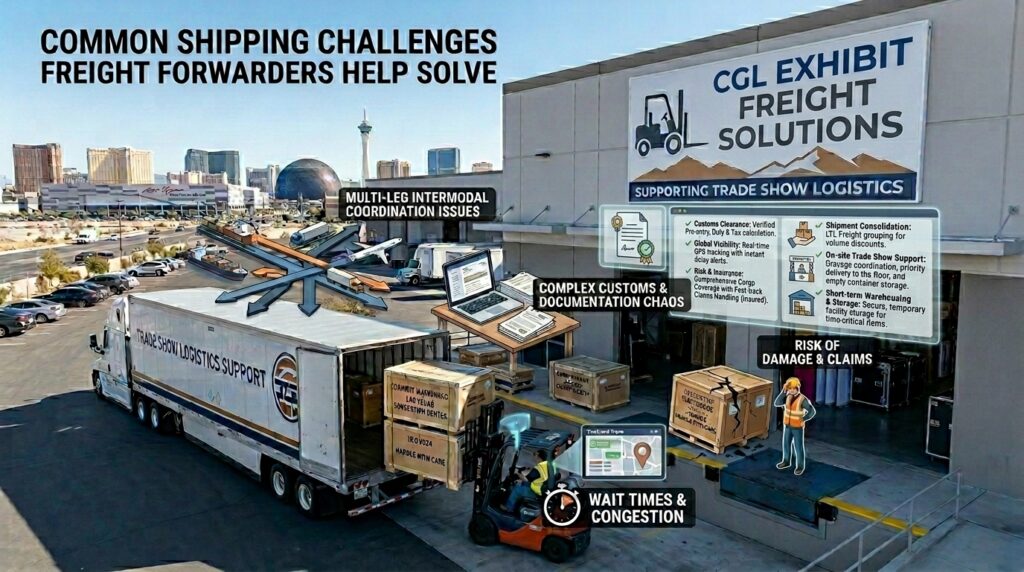
Common challenges include missed delivery schedules, incorrect labeling, damaged freight, and customs delays for international exhibitors. These issues often happen when shipping is not properly coordinated.
Many companies reduce these risks by working with logistics providers who manage transport scheduling and documentation. This is especially important for international exhibitors attending large events, where customs clearance must be handled carefully.
Using Warehousing Before the Event
Instead of sending shipments directly to the convention center, many exhibitors use local warehouses for temporary storage. This step adds flexibility to the process.
Warehousing allows businesses to store materials safely before the event begins, check shipments for accuracy, and schedule delivery at the right time. It also helps avoid congestion at busy convention loading areas.
In a busy city like Las Vegas, where multiple events often overlap, warehousing helps keep operations more organized and controlled.
Preparing for Setup Day
Setup day is one of the most time-sensitive stages of the entire process. Exhibitors are usually given limited hours to build and arrange their booths before the event opens.
During this stage, teams unload materials, assemble structures, install displays, and test equipment. Even small delays can impact the readiness of the booth.
Because of this, companies often prepare detailed internal plans so every team member knows what needs to be done upon arrival.
Coordinating the Event Team
A successful trade show depends on teamwork. Each staff member plays a specific role, whether in sales, product demonstration, or logistics support.
When roles are clearly understood before the event, communication becomes smoother during busy hours. Many companies hold planning sessions before traveling to Las Vegas to make sure everyone is aligned.
This reduces confusion and helps teams focus on engaging visitors instead of solving last-minute issues.
Handling Post-Event Logistics
The trade show process continues even after the event ends. Once the exhibition closes, businesses must dismantle booths, pack materials, and arrange return shipping.
If this step is not planned properly, companies may face delays, higher shipping costs, or storage issues. Many exhibitors prepare their return logistics in advance to make this stage smoother and faster.
Why Proper Preparation Matters
Trade shows are competitive environments where timing and organization matter. Companies that plan early usually experience fewer issues and better results during the event.
This is why structured logistics planning is essential when attending an International trade show Las Vegas event. Careful preparation helps ensure shipments arrive on time, booths are set up correctly, and teams can focus on engaging with potential clients instead of handling operational problems.
Final Thoughts
Preparing for a trade show in Las Vegas requires coordination across shipping, warehousing, booth design, and team planning. Each step plays an important role in ensuring a smooth event experience.
When businesses plan ahead and manage logistics properly, they reduce stress, avoid delays, and improve their overall performance at the trade show.