
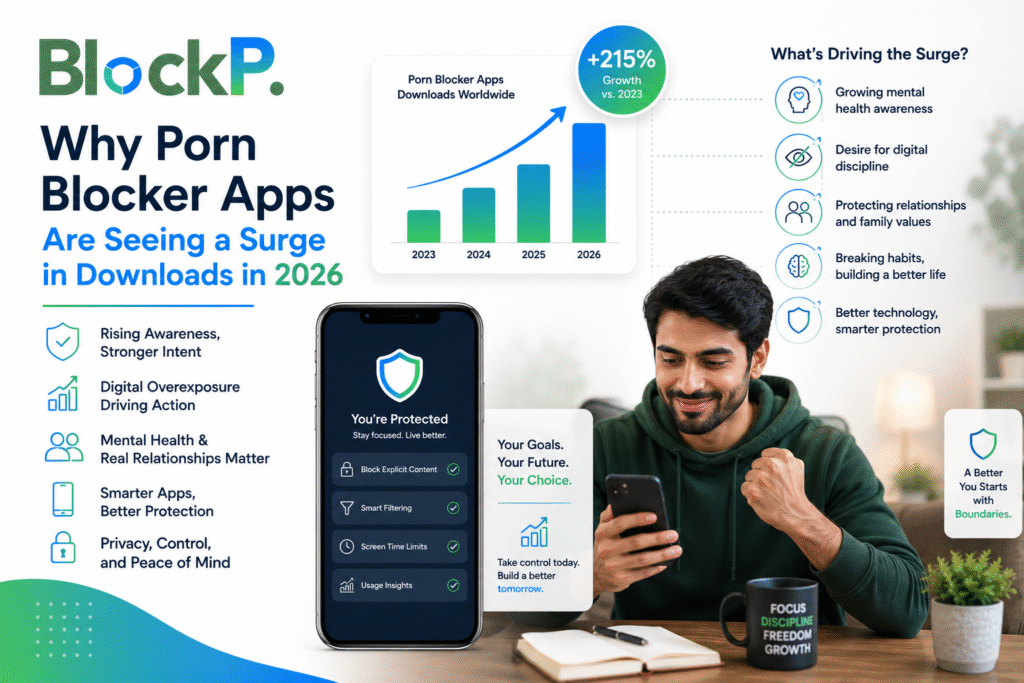
The digital wellness movement has gained significant momentum over the past few years, and 2026 appears to be a turning point. Across app stores, content-filtering tools, focus apps, screen-time managers, and online accountability platforms are seeing increased adoption from users seeking healthier relationships with technology.
Among these tools, porn blocker apps are experiencing a noticeable rise in downloads worldwide.
At first glance, some people may assume these apps are used only by individuals struggling with compulsive pornography consumption. However, recent trends suggest a much broader picture. Students, professionals, parents, couples, and individuals focused on productivity are increasingly turning to content-filtering tools as part of their overall digital wellness strategy.
This shift reflects a larger cultural change. Instead of viewing content blockers solely as recovery tools, many users now see them as proactive tools for creating intentional online environments.
As conversations around attention, mental wellbeing, and digital habits continue to evolve, porn blocker apps are becoming part of a broader effort to take control of online experiences rather than simply reacting to them.
The Rise of Digital Wellness Awareness
Over the last decade, awareness of digital wellbeing has expanded dramatically.
Topics such as:
- Screen-time management
- Social media fatigue
- Digital distraction
- Doomscrolling
- Online addiction
- Focus and productivity
have moved from niche discussions into mainstream conversations.
Many people are becoming more conscious of how digital environments influence behavior.
As a result, users are increasingly asking questions like:
- How can I reduce distractions?
- How can I create healthier habits?
- How can I spend more time intentionally online?
Porn blockers fit naturally into this larger trend because they help users customize their digital environment according to their personal goals.
A Growing Focus on Intentional Technology Use
One reason downloads are increasing is that people are becoming more proactive about technology use.
Rather than waiting for a problem to become severe, many individuals now prefer preventative approaches.
For example:
People install budgeting apps before financial problems arise.
They use fitness trackers before health concerns develop.
They use password managers before security issues occur.
Similarly, some people install content blockers before problematic habits emerge.
The goal is not necessarily restriction.
Instead, it is creating an online environment that aligns with personal priorities.
Productivity Culture Is Driving Adoption
Workplaces, schools, and universities continue to report concerns about digital distraction.
Modern devices provide instant access to entertainment, social media, streaming platforms, and countless other attention-grabbing experiences.
For many users, content blockers serve as productivity tools.
Students use them during exam preparation.
Remote workers use them to maintain focus.
Entrepreneurs use them to reduce distractions while working on long-term projects.
In this context, content filtering becomes less about restriction and more about protecting attention.
Parents Are Taking a Preventative Approach
Families represent another major driver of growth.
Many parents want to reduce the likelihood of accidental exposure to inappropriate material while supporting healthy online habits.
Today’s internet contains vast amounts of content that can be accessed unintentionally through advertisements, search results, links, or social media recommendations.
As a result, parents often seek tools that help create age-appropriate digital environments.
Importantly, many experts emphasize that technology should complement—not replace—communication and trust-building within families.
The most effective digital safety strategies typically combine education, conversations, and practical safeguards.
Increased Awareness of Algorithmic Content Delivery
Modern recommendation systems have become extremely sophisticated.
Algorithms can quickly learn user behavior and deliver increasingly personalized content.
While personalization often improves convenience, it can also create concerns about:
- Unwanted recommendations
- Escalating content exposure
- Reduced user control
- Excessive engagement
As public awareness of recommendation algorithms grows, many individuals are seeking ways to reclaim greater control over what appears in their digital environments.
Content-filtering apps offer one way to exercise that control.
Digital Habits Are Becoming a Mental Wellness Topic
Mental health professionals and digital wellbeing advocates have increasingly discussed the connection between technology use and overall wellbeing.
Although technology itself is not inherently harmful, excessive or unwanted digital consumption can sometimes contribute to:
- Reduced focus
- Increased stress
- Sleep disruption
- Emotional fatigue
- Habit-related frustration
This growing awareness has encouraged many users to evaluate how online content affects their daily lives.
For some, installing a content blocker becomes part of a broader commitment to healthier digital habits.
Not Just for Recovery Communities
Historically, porn blockers were often associated with recovery-focused communities.
While those communities remain important users of such tools, today’s audience is significantly broader.
Common users now include:
Students
Seeking distraction-free study sessions.
Professionals
Protecting focus during work hours.
Parents
Supporting age-appropriate internet access.
Couples
Creating mutually agreed digital boundaries.
Digital Minimalists
Reducing unwanted online influences.
Faith-Based Communities
Supporting personal values and intentional behavior.
This diversification helps explain why download numbers continue to grow.
Technology That Supports Personal Choice
An important aspect of this trend is that content filtering is fundamentally a personal choice.
Individuals choose different digital boundaries based on their goals, values, lifestyles, and preferences.
Some people prefer unrestricted access.
Others prefer structured environments.
Both approaches reflect personal autonomy.
Digital wellbeing advocates increasingly emphasize that blockers should not be viewed as surveillance tools or mechanisms for controlling others. Instead, they are most effective when voluntarily adopted by individuals who wish to shape their own online experiences.
Respect for privacy, transparency, and informed choice remains essential.
Improvements in Technology Have Increased Adoption
Another factor driving growth is improved technology.
Earlier generations of filtering tools often relied primarily on static website blocklists.
Modern solutions increasingly incorporate:
- AI-powered detection
- Real-time filtering
- Cross-platform protection
- Custom blocklists
- Whitelisting features
- Accountability options
These advancements make tools more flexible and practical for everyday use.
For example, platforms such as BlockP reflect the broader shift toward intelligent content filtering designed to support users across multiple devices and digital environments.
The Mainstreaming of Digital Hygiene
A growing number of experts use the term “digital hygiene” to describe habits that help people maintain healthier relationships with technology.
Examples include:
- Managing notifications
- Using strong passwords
- Limiting screen time
- Creating focus periods
- Filtering unwanted content
These practices are increasingly viewed as normal aspects of modern digital life.
As digital hygiene becomes more mainstream, content blockers are gradually moving from niche tools into broader wellness and productivity ecosystems.
What the Future May Look Like
The growth of porn blocker apps appears closely tied to larger trends that are unlikely to disappear anytime soon.
These include:
- Increased digital wellness awareness
- Greater focus on attention management
- Growing parental safety concerns
- AI-powered content moderation
- Demand for personalized online experiences
As technology becomes more integrated into daily life, users will likely continue seeking tools that help them align technology use with personal goals.
The future of content filtering may involve even greater customization, transparency, and user control.
Conclusion
The surge in porn blocker downloads during 2026 reflects more than a single trend. It represents a broader shift toward intentional technology use, digital wellbeing, and personal control over online environments.
While recovery communities remain important users of these tools, today’s audience includes students, professionals, parents, couples, and individuals seeking greater focus and healthier digital habits. Rather than viewing blockers solely as restrictive technologies, many users now see them as proactive tools that support personal goals and values.
As conversations around digital wellness continue to evolve, content-filtering apps are increasingly becoming part of the modern digital hygiene toolkit.
Frequently Asked Questions
Why are porn blocker downloads increasing globally?
Growing awareness of digital wellness, productivity challenges, online safety concerns, and intentional technology use has encouraged more people to adopt content-filtering tools as preventative and supportive resources.
Who typically uses these apps besides recovering addicts?
Users commonly include students, parents, professionals, couples, digital minimalists, educators, and individuals seeking healthier online habits or greater control over their digital environments.
Are porn blockers becoming mainstream digital hygiene tools?
Increasingly, yes. Many people now view content blockers alongside other digital wellness practices such as screen-time management, focus tools, notification control, and online safety measures designed to support healthier technology use.