
The way businesses operate is changing rapidly. Companies are no longer competing only through products, pricing, or customer service. They are also competing through technology, transparency, speed, and the ability to build trust in increasingly digital markets. Among the technologies creating new opportunities for businesses, blockchain has become one of the most transformative innovations.
Originally introduced as the foundation of cryptocurrencies, blockchain has evolved far beyond digital currencies. Today, organizations across industries are exploring blockchain platforms to improve operations, strengthen security, automate processes, and create new business models. From supply chain management and healthcare to finance, real estate, and digital identity, blockchain technology is helping companies solve problems that traditional systems often struggle to address.
Building a blockchain platform for your business is not simply about adopting a new technology trend. It is about creating a more reliable, transparent, and efficient digital infrastructure that can support long-term growth. A customized blockchain platform allows businesses to design solutions based on their specific requirements instead of depending entirely on existing systems.
This article explores the major benefits of building a blockchain platform for your business and explains why this technology is becoming an important strategic investment for organizations looking to stay competitive.
1. Increased Transparency Across Business Operations
One of the biggest advantages of blockchain technology is its ability to create transparency. Traditional business systems often rely on centralized databases where information is controlled by a single organization or department. This structure can create challenges when multiple parties need to access, verify, or share information.
A blockchain platform changes this approach by creating a distributed digital record that can be accessed by authorized participants. Every transaction or data update is recorded in a way that allows participants to verify information without relying on a single authority.
For businesses, this transparency can improve collaboration between partners, suppliers, customers, and internal teams. For example, a manufacturing company can use blockchain to track raw materials from suppliers to final products. Customers can verify product origins, while businesses can identify inefficiencies or unauthorized changes within the supply chain.
Greater transparency also helps build customer confidence. In industries where trust is critical, such as food production, pharmaceuticals, and luxury goods, blockchain can provide proof of authenticity and improve accountability.
2. Enhanced Data Security and Protection
Cybersecurity has become one of the biggest concerns for modern businesses. Data breaches, unauthorized access, and digital fraud can damage a company’s reputation and create significant financial losses.
Blockchain platforms provide advanced security features through decentralization, cryptographic protection, and immutable records. Instead of storing sensitive information in one central location, blockchain distributes data across multiple nodes. This makes it more difficult for attackers to manipulate or compromise the entire system.
Another important security benefit is immutability. Once information is recorded on a blockchain network, changing it requires verification through the network’s agreed rules. This reduces the risk of unauthorized modifications and creates a reliable record of business activities.
For businesses handling sensitive information, such as financial records, customer identities, or intellectual property, blockchain can provide an additional layer of protection and trust.
3. Improved Operational Efficiency
Many businesses still depend on manual processes, multiple intermediaries, and outdated systems that slow down operations. Blockchain platforms can streamline these processes by enabling direct, automated, and secure transactions between participants.
Smart contracts are one of the key features that improve efficiency. These digital agreements automatically execute actions when predefined conditions are met. For example, an insurance company can use smart contracts to automatically process claims after receiving verified information.
By reducing paperwork, eliminating repetitive tasks, and minimizing human involvement in routine processes, blockchain can help businesses save time and resources.
A customized blockchain platform can also connect different systems within an organization, allowing information to flow more efficiently between departments. This creates smoother workflows and improves decision-making.
4. Reduced Costs Through Automation and Disintermediation
Many traditional business processes involve third parties that verify transactions, manage records, or provide trust between parties. While these intermediaries can serve important roles, they also add additional costs and delays.
Blockchain technology allows businesses to reduce dependency on unnecessary intermediaries by creating a trusted environment where participants can interact directly. This can lower transaction costs and improve overall efficiency. By adopting custom blockchain development services tailored to specific business requirements, organizations can build secure and scalable platforms that automate transactions, streamline workflows, and create a more efficient digital ecosystem.
For example, financial businesses can use blockchain platforms to simplify payment processes by reducing the number of organizations involved in transaction verification. Supply chain companies can use blockchain to automate documentation and reduce administrative expenses.
The cost savings are not only related to money. Businesses can also reduce operational complexity by replacing fragmented systems with a unified blockchain-based solution.
5. Better Supply Chain Management
Supply chains involve multiple stakeholders, including manufacturers, suppliers, distributors, logistics providers, and customers. Managing information across these networks can be challenging because each participant may use different systems.
Blockchain platforms create a shared environment where authorized participants can access accurate and updated information. This improves tracking, accountability, and coordination throughout the supply chain.
Businesses can use blockchain to monitor product movement, verify supplier information, detect counterfeit products, and improve inventory management.
For example, a company selling medical products can use blockchain to maintain a complete record of production, transportation, and storage conditions. This helps ensure product quality while increasing trust among customers and regulators.
6. Stronger Customer Trust and Brand Reputation
Trust is one of the most valuable assets for any business. Customers today want more information about the products and services they purchase. They expect companies to provide transparency, security, and authenticity.
Blockchain technology can help businesses demonstrate reliability by providing verifiable information about transactions, products, and processes.
A retail brand can use blockchain to prove that products are ethically sourced. A financial company can provide customers with greater visibility into transactions. A digital platform can offer secure identity management solutions.
When customers know that information cannot easily be changed or manipulated, their confidence in the business increases. This stronger relationship can lead to higher customer loyalty and improved brand reputation.
7. New Revenue Opportunities and Business Models
Building a blockchain platform can help businesses create new ways to generate revenue. Instead of only improving existing operations, blockchain can enable entirely new services and products.
Companies can develop digital marketplaces, token-based ecosystems, decentralized applications, and blockchain-powered services. These opportunities allow businesses to reach new customers and explore innovative approaches.
For example, companies can create digital ownership systems, reward programs using blockchain-based assets, or platforms that connect users directly without traditional intermediaries.
Blockchain also supports the growth of digital assets and decentralized business models, allowing organizations to explore opportunities that were previously difficult to implement.
8. Improved Data Management and Accuracy
Reliable data is essential for effective business decisions. However, organizations often struggle with incomplete, outdated, or inconsistent information because data is stored across multiple systems.
Blockchain provides a single source of verified information that authorized users can access. This improves data accuracy and reduces conflicts caused by different versions of records.
For businesses using analytics, artificial intelligence, or automation, high-quality data is especially important. Blockchain can create a trustworthy foundation for these technologies by ensuring that the information being analyzed is accurate and secure.
Better data management allows companies to make faster and more informed decisions.
9. Faster and More Secure Payments
Payment processing can be complicated, especially for businesses operating internationally. Traditional payment systems often involve multiple banks, processing networks, and verification steps.
Blockchain platforms can simplify payment processes by enabling faster peer-to-peer transactions with improved transparency. Businesses can reduce processing delays and create more efficient payment experiences.
This is particularly valuable for global companies that work with international suppliers, customers, or partners. Blockchain-based payment solutions can help reduce friction in cross-border transactions and improve financial operations.
10. Improved Compliance and Auditing
Regulatory compliance is a major responsibility for businesses in many industries. Maintaining accurate records and preparing for audits can require significant time and resources.
Blockchain can simplify compliance by creating reliable and traceable records of business activities. Since blockchain maintains a detailed history of transactions, companies can more easily demonstrate accountability to regulators and auditors.
Financial institutions, healthcare organizations, and government-related businesses can especially benefit from blockchain-based record management systems.
The ability to quickly verify information can make compliance processes more efficient and reduce administrative challenges.
11. Enhanced Collaboration Between Business Partners
Modern businesses often depend on partnerships and interconnected ecosystems. However, collaboration can become difficult when organizations use different systems and have concerns about data sharing.
Blockchain platforms create a trusted environment where multiple parties can collaborate without giving complete control to one organization. Participants can share verified information while maintaining appropriate access restrictions.
This encourages stronger partnerships and creates opportunities for businesses to work together more efficiently.
Industries such as logistics, healthcare, finance, and manufacturing can benefit greatly from blockchain-based collaboration networks.
12. Greater Control Over Digital Identity
Digital identity management is becoming increasingly important as businesses move more services online. Traditional identity systems can be vulnerable to fraud, duplication, and unauthorized access.
Blockchain can support secure digital identity solutions where users have better control over their personal information. Businesses can verify identities more efficiently while reducing identity-related risks.
This technology can improve customer onboarding, access management, and authentication processes.
For companies handling large amounts of user data, blockchain-based identity solutions can provide a more secure and user-friendly experience.
13. Competitive Advantage in a Digital Economy
Technology adoption can determine whether businesses lead or follow in competitive markets. Companies that invest in blockchain platforms early can gain advantages through improved efficiency, stronger customer relationships, and innovative services.
Blockchain is not suitable for every business challenge, but organizations that identify the right use cases can create significant value. A well-designed blockchain strategy can help businesses differentiate themselves and prepare for future digital transformation.
By building a customized blockchain platform, companies can create technology solutions that align with their goals instead of relying on generic tools.
Challenges to Consider Before Building a Blockchain Platform
While blockchain offers many benefits, businesses should carefully evaluate their requirements before starting development. Building a successful blockchain platform requires clear objectives, technical expertise, and a well-planned implementation strategy.
Companies should consider factors such as scalability, regulatory requirements, user adoption, integration with existing systems, and maintenance needs.
Choosing the right blockchain architecture is also important. Different businesses may require different approaches, including private blockchain networks, public blockchain solutions, or hybrid models.
Working with experienced blockchain developers and technology partners can help organizations create platforms that deliver practical business value.
Conclusion
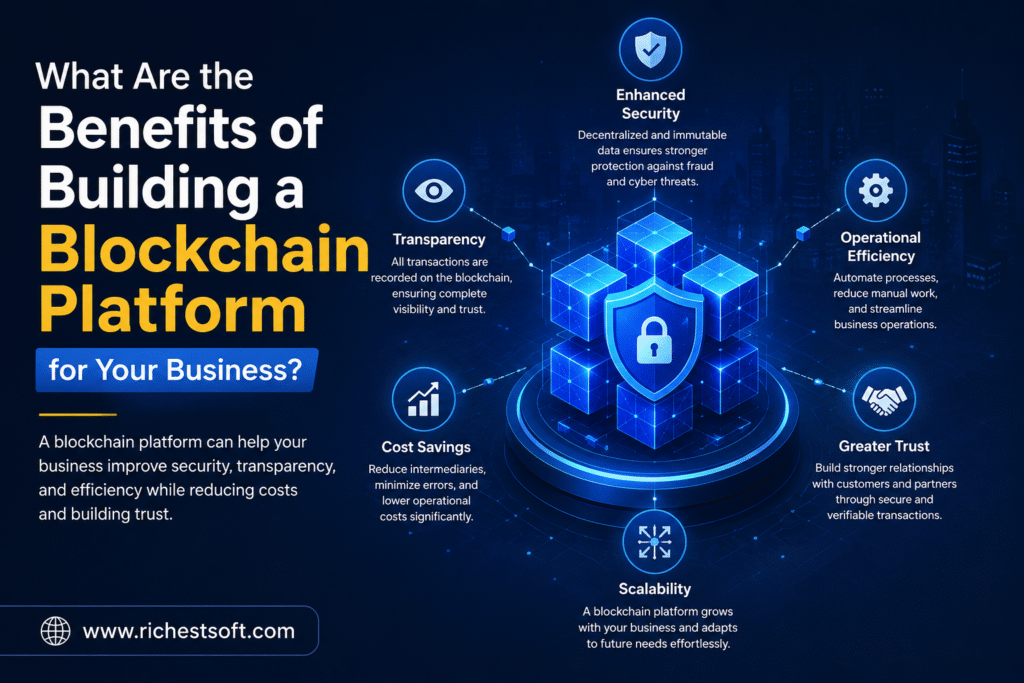
Building a blockchain platform can provide businesses with powerful advantages, including improved transparency, stronger security, operational efficiency, cost reduction, and new opportunities for innovation.
As industries continue to become more digital, businesses need technology solutions that create trust, improve collaboration, and support long-term growth. Blockchain offers a foundation for building more connected, secure, and efficient business ecosystems.
The real value of blockchain is not only in the technology itself but in how businesses use it to solve meaningful problems. Companies that carefully identify opportunities and develop strategic blockchain solutions can unlock new possibilities and build stronger foundations for the future.
Whether your goal is improving internal processes, enhancing customer trust, creating new digital services, or optimizing business operations, a blockchain platform can become a valuable tool for achieving sustainable growth in the modern economy.