
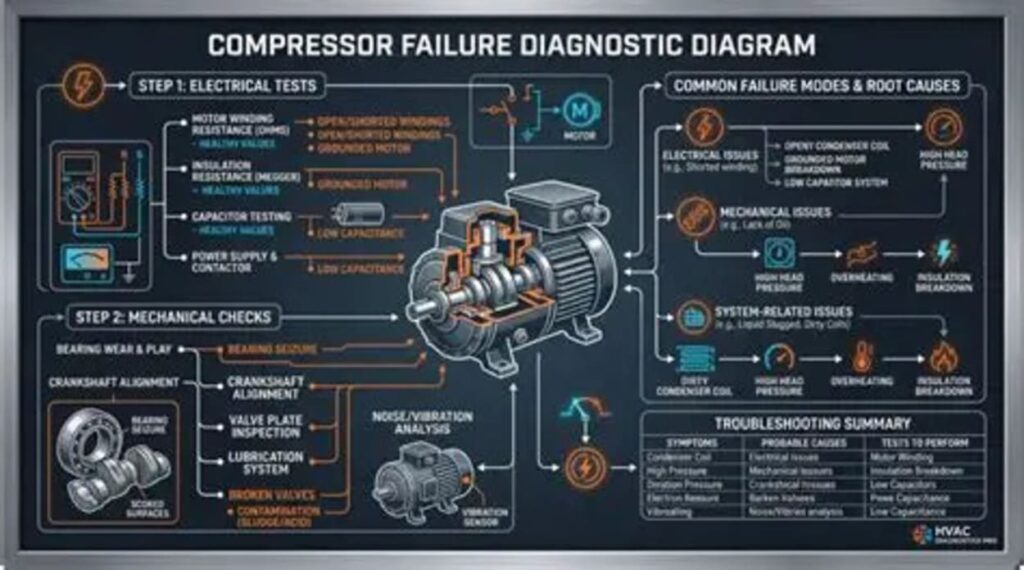
A compressor is often considered the heart of an air conditioning or refrigeration system. It circulates refrigerant, maintains the pressure difference required for heat transfer, and plays a critical role in overall system performance. When a compressor fails prematurely, the result can be expensive repairs, system downtime, and reduced equipment efficiency.
While some compressor failures are caused by normal wear and age, many occur because of hidden problems that develop gradually. Understanding these causes can help homeowners, technicians, and facility managers take preventive action and extend compressor service life.
1. Poor Refrigerant Charge
Incorrect refrigerant charge is one of the most common factors behind compressor problems. Both undercharging and overcharging can place unnecessary stress on the compressor.
An undercharged system may operate with insufficient refrigerant flow, causing the compressor to run longer and potentially overheat. Overcharging, meanwhile, can increase system pressures and force the compressor to work beyond its intended operating range.
Proper refrigerant charging should always follow the manufacturer’s specifications. Technicians should also investigate leaks rather than simply adding refrigerant repeatedly.
2. Inadequate Lubrication
Compressors contain moving components that require proper lubrication to minimize friction and wear. If the oil level is too low, contaminated, or unsuitable for the system, internal components may deteriorate much faster.
Oil can become contaminated by moisture, dirt, acids, or other substances. In some situations, improper oil return can also prevent the compressor from receiving adequate lubrication.
Regular system inspections and the use of manufacturer-approved lubricants can help maintain reliable compressor operation.
3. Electrical Problems
Electrical issues are another hidden cause of premature compressor failure. Voltage fluctuations, phase imbalance, loose connections, damaged wiring, and inadequate electrical protection can create excessive heat inside the compressor motor.
Repeated voltage abnormalities may eventually damage motor windings and reduce compressor reliability. Installing appropriate protection devices and checking electrical connections during routine maintenance can help identify problems before they become serious.
Technicians should measure voltage and current according to the equipment manufacturer’s requirements rather than relying only on visual inspection.
4. Overheating and Excessive Operating Temperatures
Compressors naturally generate heat during operation, but excessive temperatures can significantly shorten their lifespan. Poor airflow, dirty condenser coils, high ambient temperatures, incorrect refrigerant conditions, and inadequate ventilation can all contribute to overheating.
When a compressor operates under excessive thermal stress for extended periods, lubricating oil can deteriorate and motor insulation may become damaged.
Keeping condenser coils clean, maintaining adequate airflow, and ensuring the outdoor unit has sufficient ventilation are simple but effective ways to control operating temperatures.
5. Liquid Refrigerant Returning to the Compressor
Compressors are designed primarily to handle refrigerant vapor. If liquid refrigerant enters the compressor, a condition commonly known as liquid slugging can occur. Because liquid is difficult to compress, it can cause severe mechanical stress and damage internal components.
Liquid return may result from improper refrigerant charging, malfunctioning expansion devices, incorrect system design, or insufficient superheat.
Proper system commissioning and regular measurement of operating conditions can help prevent liquid refrigerant from reaching the compressor.
6. Contaminants and Moisture
Moisture, dirt, acids, and other contaminants can cause serious damage to refrigeration and air conditioning systems. Moisture can react with refrigerant and oil, potentially creating corrosive compounds that attack internal components.
Contaminants can also clog filters, restrict refrigerant flow, and damage valves or other components.
Using proper evacuation procedures during installation or repair, replacing filters and driers when necessary, and keeping the refrigerant circuit sealed can greatly reduce contamination risks.
7. Dirty Condenser and Evaporator Coils
Dirty coils may appear to be a minor maintenance issue, but they can have a major impact on compressor performance. A dirty condenser coil restricts heat rejection, causing condensing pressure and compressor workload to increase.
Likewise, an excessively dirty evaporator coil can reduce airflow and interfere with normal system operation.
Routine coil cleaning helps maintain efficient heat transfer and reduces the amount of work required from the compressor.
8. Short Cycling
Short cycling occurs when an air conditioning system starts and stops more frequently than it should. Every startup places additional electrical and mechanical stress on the compressor.
Several problems can cause short cycling, including an oversized system, thermostat issues, restricted airflow, refrigerant problems, or poor system design.
Identifying the underlying cause is more effective than simply replacing the compressor. Correcting the cycling problem can protect the replacement compressor from experiencing the same failure.
9. Neglected Preventive Maintenance
One of the biggest hidden causes of compressor failure is simply a lack of maintenance. Small problems can remain unnoticed until they develop into expensive failures.
A preventive maintenance program should include inspections of refrigerant pressures, electrical connections, operating temperatures, airflow, coils, filters, and unusual noises or vibrations.
Early detection allows technicians to correct developing problems before they cause major compressor damage.
How to Extend Compressor Life
Preventing premature compressor failure does not always require complicated measures. The most effective approach is consistent system maintenance combined with proper installation and operation.
Use the correct refrigerant and lubricant, maintain clean coils and filters, monitor electrical conditions, prevent refrigerant leaks, and ensure adequate airflow around the equipment. Professional inspections can also identify operating conditions that may not be obvious during everyday use.
Conclusion
Premature compressor failure is rarely caused by a single obvious problem. Poor refrigerant charge, inadequate lubrication, electrical abnormalities, overheating, contamination, liquid refrigerant return, dirty coils, short cycling, and neglected maintenance can gradually place excessive stress on the compressor.
By identifying these hidden causes and addressing them early, equipment owners can improve system reliability, reduce unexpected downtime, and potentially extend compressor service life. A proactive maintenance strategy is ultimately one of the most effective ways to protect the compressor and the entire HVAC or refrigeration system.
This article post by: acjakarta – harga ac 1/2 pk