
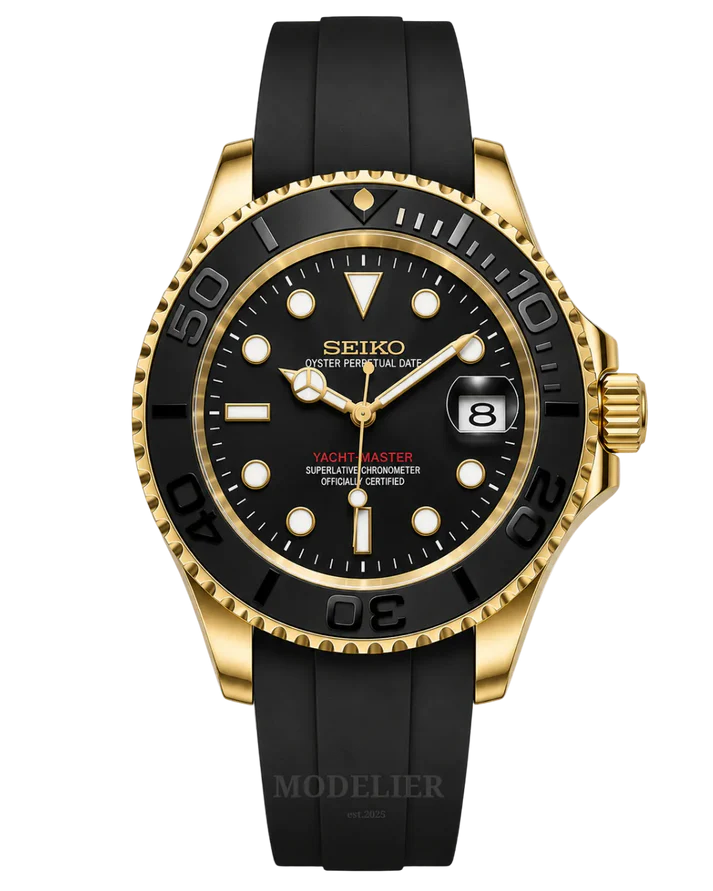
Design trends come and go with dizzying speed. One season we are told to embrace minimal, sterile tech; the next, we are inundated with loud, flashing logos and over-engineered luxury items designed to scream for attention from across a room. Yet, amidst all this noise, a quiet design philosophy born in Japan has steadily captured the hearts of purists worldwide.
It is an aesthetic known simply to enthusiasts as the Seiko Style.
To the untrained eye, a watch built under this philosophy is just a clean, legible timepiece. But to those who appreciate design, it represents something far deeper: a deliberate masterclass in geometric harmony, light play, and a radical commitment to functional beauty. It is an approach to style that proves you don’t need to shout to be noticed.
The Birth of a Design Language
For the first half of the twentieth century, the global watch industry was dominated by Swiss design principles. European watches favored soft curves, rounded cases, and traditional styling. But in the 1960s, a young designer named Taro Tanaka arrived at Seiko with a bold mission: to create a visual identity that could compete with the world’s finest luxury houses while remaining distinctly Japanese.
Tanaka realized that to stand out, Japanese watches needed to interact with light in a completely new way. He established a strict set of design rules that became known as the Grammar of Design.
+---------------------------------------------------------------+
|                 TANAKA'S GRAMMAR OF DESIGN                    |
+-------------------+-------------------------------------------+
| CORE PRINCIPLE    | VISUAL IMPACT                             |
+-------------------+-------------------------------------------+
| Flat Surfaces     | Hand-polished planes that act like        |
|                   | mirrors, reflecting sharp highlights.     |
+-------------------+-------------------------------------------+
| No Distortion     | Distortion-free cases that catch light    |
|                   | perfectly from any angle.                 |
+-------------------+-------------------------------------------+
| Multi-Faceted     | Hands and hour markers cut with razor-    |
| Geometry          | sharp edges to maximize legibility.       |
+-------------------+-------------------------------------------+
Instead of using rounded surfaces that diffused light softly, Tanaka demanded perfectly flat, angular planes polished to a mirror finish. This meant that even in a dimly lit room, a watch utilizing the Seiko Style would catch the tiniest glint of ambient light, making it instantly readable and strikingly sharp.
Shadows, Light, and the Japanese Aesthetic
At its core, Seiko Style is deeply intertwined with traditional Japanese aesthetics, particularly the concept of In’ei Raisan (Praise of Shadows). While Western design often focuses on illuminating everything brightly, classic Japanese architecture and art find immense beauty in the interplay between deep shadows and crisp highlights.
Every angle of a Seiko Style case is intentionally cut to create a dramatic boundary where light ends and shadow begins. The hands aren’t just flat strips of metal; they are multi-faceted, diamond-cut blades with a mountain-ridge peak running down the center. When light hits one side of the hand, the other side falls into deep shadow. The result is an object that looks alive on the wrist, changing its personality every time you move your arm.
The Elements of the Look
So, what actually makes a watch embody this iconic style? There are a few unmistakable signatures that collectors look for:
- The Sharp Case Flanks: Rather than a continuous curve, the sides of the case feature distinct, flat facets that meet at razor-sharp edges.
- The Recessed Crown: Often tucked away neatly at the 4 o’clock position rather than the traditional 3 o’clock. This keeps the silhouette incredibly clean and prevents the crown from digging into the back of your hand.
- Intricate Nature-Inspired Dials: From the delicate snowflake textures of their premium lines to the rich, linen-weave patterns found on everyday dress pieces, the dials often mimic organic textures found in the natural world.
The Zaratsu Polish: A defining characteristic of high-end Seiko Style is the use of Zaratsu polishing—a meticulous hand-finishing technique where artisans press the steel case against a rotating tin plate. It requires years of training to master, resulting in a mirror-like finish with zero optical distortion.
Why “Seiko Style” Outlives the Hype
The true brilliance of this design philosophy is its incredible versatility. It bridges the gap between rugged utility and high-end elegance. You can take a watch built with these geometric principles, swap its steel bracelet for a casual leather strap, and watch it seamlessly transition from an industrial workspace to a formal evening event.
It is an aesthetic built on honesty. It doesn’t rely on flashy branding, superficial gold plating, or temporary design gimmicks. It relies on the absolute perfection of its proportions and the way it handles light.
In a modern culture that often conflates luxury with excess, adopting a taste for the Seiko Style is a refreshing course correction. It tells the world that you appreciate fine architecture, disciplined engineering, and historical depth—all contained within a quiet, beautifully balanced object that slips effortlessly under your shirt cuff.