
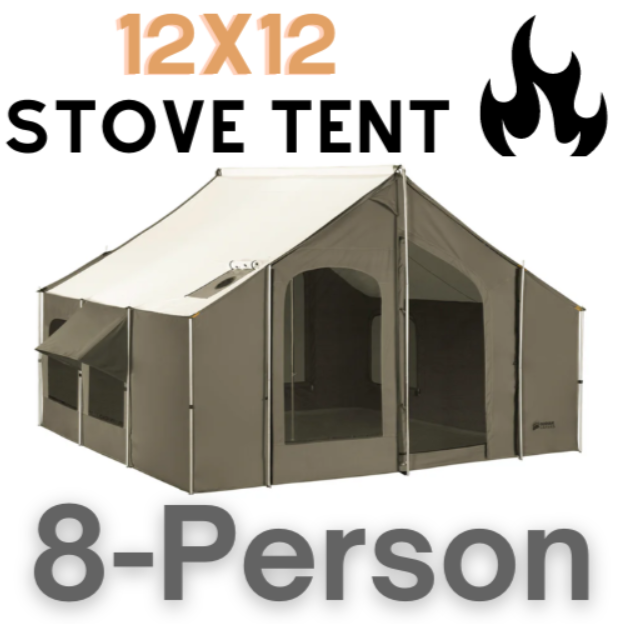
A cabin tent gives you standing room, defined sleeping areas, and a layout that feels more like a room than a camping shelter. They are the right choice for car campers, families, and anyone who spends more than one night at a site. Knowing what separates a quality cabin tent from a cheap one prevents a disappointing trip.
What Makes a Cabin Tent Different
Cabin tents have near-vertical walls, which means the livable floor area is close to the stated square footage. A standard dome tent with sloped walls loses 30 to 40 percent of its floor space to angled sections. For the same stated dimensions, a cabin tent delivers significantly more usable space.
The trade-off is wind resistance. Vertical walls catch more wind than a low-profile dome. For exposed campsites or high-wind conditions, a lower-profile tent is more stable. For established campgrounds with wind protection, a cabin tent is the more comfortable option.
Key Features to Check When Cabin Tents Are for Sale
- Waterproofing: look for a minimum hydrostatic head rating of 1,500mm on the fly and 3,000mm on the floor.
- Pole material: fiberglass poles are standard on budget tents. Aluminum poles are stronger, lighter, and more durable.
- Ventilation: cabin tents with multiple mesh windows and a vented rainfly reduce condensation significantly.
- Dividers: some cabin tents include room dividers that create separate sleeping areas — useful for families.
According to the Outdoor Industry Association, camping participation in the United States has grown consistently, with families and car campers driving the highest demand for large-format cabin-style tents. (Outdoor Industry Association Participation Report)
Canvas Versus Synthetic Cabin Tents
Canvas cabin tents breathe better, regulate temperature more effectively, and last significantly longer than polyester or nylon alternatives. They are heavier and require more care, but for regular campers who use the same site repeatedly, a canvas cabin tent is a better long-term investment than replacing a synthetic tent every few years.
Key Takeaways
When shopping cabin tents for sale, prioritize waterproofing ratings, pole quality, and ventilation design over stated sqWhen shopping cabin tents for sale, prioritize waterproofing ratings, pole quality, and
ventilation design over stated square footage. A smaller cabin tent with quality materials
and construction outperforms a larger one made with budget components in every
condition that matters.