
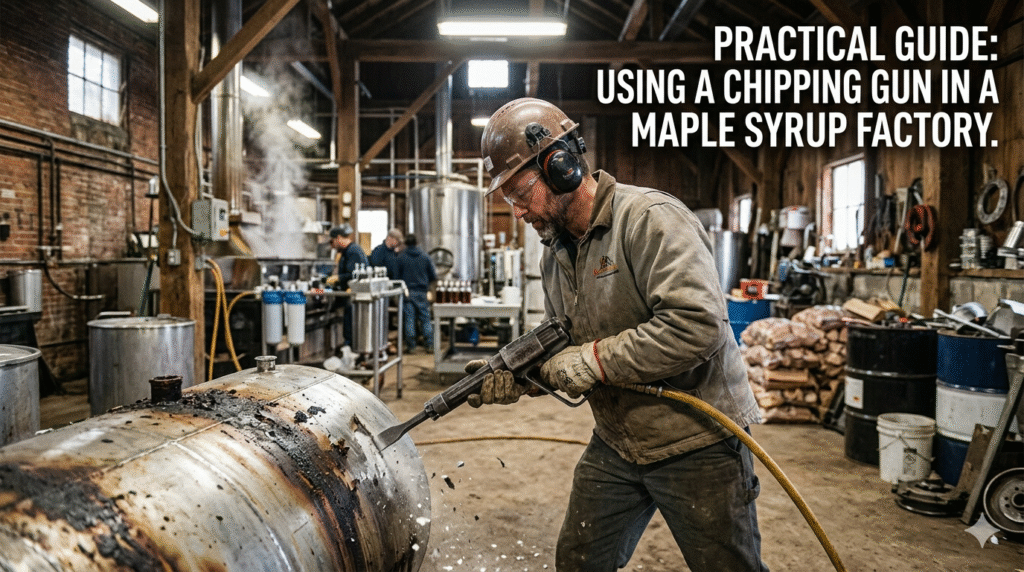
In construction, renovation, and industrial maintenance, surface removal is often one of the most time-consuming tasks. Whether you’re breaking concrete, removing old tile adhesives, or cleaning weld slag, doing it manually can slow down productivity and increase fatigue. This is where power tools designed for precision demolition become essential.
A chipping gun is one of the most widely used tools for controlled material removal. Unlike heavy breakers used for large-scale demolition, a chipping gun is designed for detail-oriented work where accuracy and surface control matter. Professionals in construction, fabrication, and maintenance rely on it for tasks that require both power and precision.
Understanding how this tool works, when to use it, and how to operate it safely can significantly improve job efficiency. It also reduces physical strain and ensures cleaner, more professional results across a wide range of applications.
What Is a Chipping Gun and How Does It Work?
A chipping gun is a handheld pneumatic or electric tool designed to chip away hard materials such as concrete, mortar, metal slag, and tile adhesive. It operates by delivering rapid, repetitive hammering action through a chisel or pointed bit. This impact force breaks the bond between the material and the surface underneath.
Most chipping guns are powered by compressed air, although electric versions are also available. Pneumatic models are more common in industrial environments due to their durability and consistent performance. The air-driven piston inside the tool moves back and forth at high speed, transferring energy to the tool bit.
The interchangeable chisels allow workers to adapt the tool to different surfaces and tasks. For example, a pointed chisel is ideal for breaking concrete edges, while a flat chisel is better suited for scraping or smoothing surfaces.
Unlike large jackhammers, chipping guns offer better control and reduced vibration, making them suitable for detailed or vertical work such as overhead cleaning or edge trimming.
Step-by-Step Guide to Using a Chipping Gun Effectively
Using a chipping gun correctly not only improves efficiency but also ensures safety and extends the life of the tool. Below is a practical approach used by experienced technicians in the field.
1. Select the Right Chisel Attachment
Before starting, choose the correct chisel based on the job requirement. A pointed chisel works best for breaking tough spots or initiating cracks. A flat chisel is better for removing coatings, adhesives, or smoothing rough areas. Using the wrong attachment can reduce efficiency and increase wear on the tool.
2. Inspect the Tool and Air Supply
If you are using a pneumatic model, check the air hose for leaks or damage. Ensure that the compressor provides sufficient pressure for optimal performance. Most chipping guns require a stable air pressure range to function effectively.
Also inspect the tool body, trigger mechanism, and chisel lock before operation. Any loose or damaged part should be repaired before use.
3. Secure the Work Area
A stable and safe work environment is essential. Make sure the surface being worked on is properly supported. Remove any unnecessary objects and ensure there is enough space to maneuver the tool. In construction sites, proper barricading may be required to prevent accidents.
4. Hold the Tool Properly
Grip the chipping gun firmly with both hands if possible. Maintain a balanced stance to control recoil. Avoid leaning directly into the tool, as the vibration can lead to fatigue over time. Let the tool do the work instead of forcing it into the material.
5. Begin Chipping Gradually
Start at a low angle to the surface. Apply steady pressure and allow the chisel to break into the material gradually. Do not force deep penetration in one attempt. Instead, work in layers for better control and cleaner results.
6. Clean and Inspect During Operation
Pause periodically to remove debris from the working area. This helps maintain visibility and prevents overheating of the tool. It also allows you to check whether the chisel is wearing down and needs replacement.
7. Shut Down and Maintain the Tool
After completing the task, disconnect the air supply or power source. Clean the chisel and tool body thoroughly. Regular lubrication and inspection help maintain long-term performance and reduce breakdowns.
Common Mistakes or Challenges When Using a Chipping Gun
Despite being a relatively simple tool to operate, users often make mistakes that reduce efficiency or cause unnecessary wear.
One common mistake is applying excessive force. Many beginners assume that pushing harder will speed up the process, but in reality, it can damage both the tool and the surface. The chipping gun is designed to work with controlled impact, not brute force.
Another issue is using a worn-out chisel. A dull or damaged chisel reduces performance and increases vibration. This not only slows down the work but also puts extra stress on the operator.
Improper air pressure settings in pneumatic models can also lead to inconsistent performance. Too much pressure can cause overheating, while too little reduces impact power.
Finally, ignoring safety equipment is a serious concern. Without proper goggles, gloves, and hearing protection, operators risk injury from flying debris and prolonged vibration exposure.
Practical Tips and Expert Recommendations
Experienced professionals often rely on small but effective habits to maximize efficiency when using a chipping gun.
First, always match the tool size to the job. A lightweight chipping gun is ideal for precision work, while heavier models are better suited for tougher materials. Using the right size reduces fatigue and improves accuracy.
Second, keep a consistent working angle. A 30 to 45-degree angle is generally effective for most surface removal tasks. This helps control the depth of penetration and reduces bouncing.
Third, take breaks during extended use. Continuous vibration can lead to hand fatigue, so short breaks improve long-term productivity and safety.
Another useful tip is to work in sections rather than trying to clear a large area at once. Breaking the job into smaller sections improves control and ensures a more uniform finish.
Regular maintenance is equally important. Cleaning internal components and lubricating moving parts can significantly extend tool life. It also ensures consistent performance on demanding job sites.
Conclusion
A chipping gun is an essential tool for controlled demolition and surface preparation tasks across construction and industrial environments. Its precision, power, and versatility make it ideal for jobs that require more control than heavy breaking tools.
When used correctly, it improves efficiency, reduces manual effort, and delivers clean, accurate results. Understanding proper handling techniques, avoiding common mistakes, and maintaining the tool regularly are key to getting the best performance.
For professionals who deal with concrete removal, metal cleaning, or renovation work, mastering the use of a chipping gun is not just helpful—it is a core skill that directly impacts productivity and job quality.