
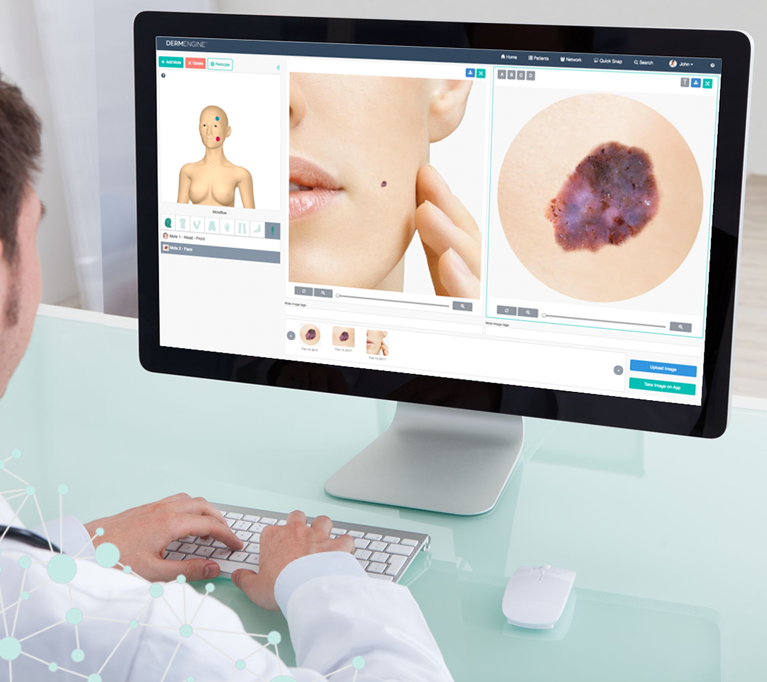
The landscape of modern medicine is witnessing a profound shift, driven by the rapid evolution of artificial intelligence in clinical workflows. As the global incidence of skin malignancies continues to rise, the medical community is increasingly relying on sophisticated diagnostic tools to ensure timely intervention. Among the most critical advancements is the development of robust systems for melanoma detection, which leverage deep-learning architectures to provide clinicians with unprecedented diagnostic support. By integrating these high-performance algorithms, healthcare providers can now achieve higher sensitivity and specificity in identifying suspicious lesions, effectively bridging the gap between initial patient observation and definitive pathological assessment.
The Clinical Necessity for Advanced Diagnostics
Dermatology is fundamentally a visual specialty, yet human perception is inherently limited by subjective experience, fatigue, and the inherent complexity of skin patterns. Traditional methods, while effective when performed by experts, are often hindered by the shortage of specialists and the time-intensive nature of manual dermoscopy. The integration of automated systems addresses these bottlenecks by providing a standardized, objective analysis of high-resolution imagery. These tools are designed to flag anomalies that might otherwise escape the notice of a non-specialist, thereby streamlining referrals and ensuring that high-risk cases are prioritized for urgent care.
Evolution of Convolutional Neural Networks
The core of this diagnostic transformation lies in the refinement of Convolutional Neural Networks (CNNs) and vision transformers. These deep-learning models are trained on hundreds of thousands of clinically validated, annotated images, allowing them to learn nuanced features of skin architecture. By 2026, architectures such as the YOLO and DINO frameworks have enabled real-time, high-speed inference, turning standard smartphones into powerful diagnostic assistants. This leap in capability means that dermatological excellence is no longer confined to top-tier hospital settings; it is becoming accessible in primary care clinics, pharmacies, and even community settings.
The Role of Machine Learning in Risk Stratification
Effective risk stratification is the cornerstone of successful oncology, and AI is increasingly playing a pivotal role in this process. Beyond simple binary classification, modern algorithms can categorize lesions into risk tiers—distinguishing between urgent cases that require immediate biopsy, cases that can be monitored, and benign conditions that require no further intervention. This tiered approach not only enhances diagnostic accuracy but also significantly reduces the incidence of unnecessary procedures, alleviating patient anxiety and optimizing clinical resources.
Empowering Practitioners with the AI Dermatologist
The emergence of the ai dermatologist as an auxiliary tool has fundamentally altered the standard of care for many medical practices. Rather than replacing the physician, these intelligent systems serve as a force multiplier for general practitioners and nurse practitioners, who are often the first line of contact for patients with skin concerns. By providing immediate, evidence-based guidance, the technology empowers these professionals to manage their patient portfolios with greater confidence, leading to earlier detections and better long-term survival outcomes.
How does AI ensure diagnostic accuracy across diverse populations?
A primary focus for developers in 2026 is the elimination of algorithmic bias through the use of inclusive, representative training datasets. By training models on images that encompass the full spectrum of Fitzpatrick skin phototypes, current systems are significantly more robust than their predecessors. Furthermore, advanced image-normalization techniques now account for variations in lighting, focus, and camera quality, ensuring that the technology remains effective regardless of the clinical environment.
Ethical Considerations and Data Privacy
As with any deployment of autonomous technology, ethical implementation remains a priority. Patient privacy and data security are managed through strictly compliant, encrypted frameworks that prioritize the protection of sensitive medical images. Transparency is also essential; clinicians and patients must understand the role of the AI as a decision-support system, with the final diagnostic responsibility resting with the human provider. Clear protocols for informed consent and data de-identification ensure that the use of these tools remains consistent with global health regulations.
Why is real-time processing significant for patient access?
Real-time processing removes the administrative and logistical barriers that often delay diagnosis. When a patient can receive a clinical-grade assessment in the time it takes to capture a photograph, the “wait-and-see” approach is replaced by immediate clinical action. This speed is vital because survival rates for skin cancer are intrinsically linked to the time elapsed between initial suspicion and effective medical intervention.
The Future of Multimodal Diagnostics
Looking ahead, the next phase of innovation involves the fusion of multiple data sources, including genetic biomarkers, patient history, and real-time environmental data. By moving toward “multimodal” models, clinicians hope to build a 360-degree view of a patient’s dermatological health. Imagine a future where an algorithm not only analyzes an image for suspicious morphology but also incorporates the patient’s sun-exposure history and genetic risk profile to provide a personalized, predictive management plan.
Overcoming Integration Challenges
Despite the clear benefits, integrating these systems into existing hospital workflows requires deliberate strategy. Successful adoption depends on seamless interoperability with Electronic Health Records (EHR) and continuous clinical validation against histopathology—the diagnostic gold standard. By maintaining these rigorous standards, medical institutions can ensure that the technology not only performs well in research settings but also remains consistently reliable in the high-pressure environment of daily clinical practice.
How can patients safely engage with AI-based screening tools?
Patients should prioritize the use of tools that are medically regulated and backed by clinical validation. Engaging with these tools requires a balanced perspective—they are excellent for initial screening and awareness but should never be viewed as a substitute for a professional skin check. If a tool flags a concern, the patient should view this as an important signal to schedule a follow-up with a board-certified dermatologist for a formal examination.
Conclusion: A Synergistic Approach
The convergence of high-resolution digital imaging, robust artificial intelligence, and telemedicine is redefining the clinical experience. By providing an objective layer of analysis, these systems support clinicians in their efforts to provide safer, more accurate, and more efficient care. While technology continues to advance, the human element—the empathetic connection between doctor and patient—will always remain the bedrock of medicine. In the coming years, we can expect these tools to become even more deeply embedded in routine examinations, ultimately saving countless lives through the power of early detection.