
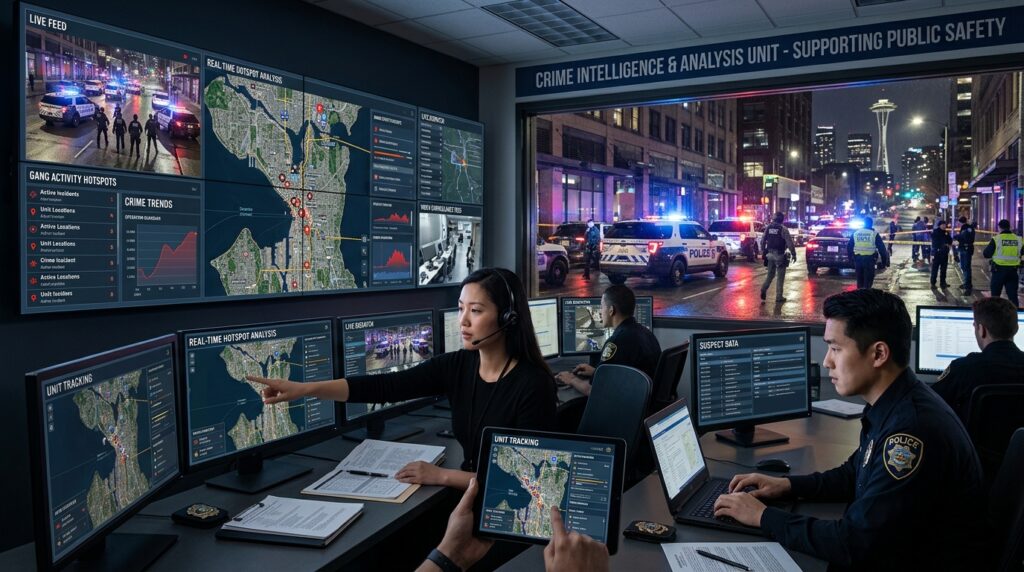
Public safety agencies face growing challenges every day. Crime patterns shift quickly, technology continues to evolve, and communities expect faster and more effective responses from law enforcement. Because of this, agencies now rely heavily on crime intelligence to support both daily operations and long-term planning.
Crime intelligence helps departments collect, organize, and analyze information so they can make informed decisions. Instead of responding only after incidents occur, agencies can identify risks early and take preventive action.
Today, crime intelligence supports patrol operations, criminal investigations, emergency response planning, and real-time crime monitoring.
Understanding Crime Intelligence
Crime intelligence is the process of gathering and analyzing information related to criminal activity. Analysts review data from police reports, surveillance systems, public records, and other sources to identify patterns and possible threats.
The goal is to turn raw information into practical insights that officers and decision-makers can use.
For example, analysts may notice that vehicle thefts increase in certain areas during late evening hours. Law enforcement agencies can then adjust patrol schedules and place more officers in those locations during high-risk times.
This type of data-driven approach improves both efficiency and public safety.
How Crime Intelligence Supports Patrol Operations
One of the most important uses of crime intelligence is helping agencies deploy resources more effectively.
Analysts study crime trends to determine:
- where incidents occur most often,
- when crime activity increases,
- and which neighborhoods may require additional patrols.
This process helps departments focus their resources where they are needed most.
Example of Crime Trend Analysis
| Area | Weekly Incident Increase | Recommended Action |
| Downtown District | +18% theft reports | Increase evening patrols |
| Residential Zone A | +12% burglary reports | Add overnight monitoring |
| Transit Hub | +9% assault incidents | Deploy foot patrol teams |
Instead of relying only on routine patrol patterns, departments can make informed decisions based on current crime activity.
Supporting Criminal Investigations
Crime intelligence also strengthens investigations. Analysts help detectives organize large amounts of information and identify connections between cases.
In many investigations, analysts create:
- geographic crime maps,
- timeline reports,
- and suspect relationship charts.
These tools help investigators understand how people, locations, and incidents may be connected.
For example, similar crime patterns across different neighborhoods may point to organized criminal activity. Without intelligence analysis, these connections could remain unnoticed.
As investigations become more complex, intelligence support becomes increasingly valuable.
The Role of Real-Time Crime Centers
Many law enforcement agencies now operate Real-Time Crime Centers, often called RTCCs. These centers combine technology, live monitoring systems, and intelligence analysis to support officers in the field.
During active incidents, analysts may review surveillance footage, examine nearby criminal activity, or provide information about known offenders in the area.
This allows officers to receive useful information while incidents are still unfolding.
Real-time intelligence improves situational awareness and helps agencies respond faster during emergencies.
Crime Prevention Through Data Analysis
Modern public safety strategies focus not only on responding to crime but also on preventing it.
Crime intelligence helps agencies identify repeat patterns, high-risk areas, and emerging threats before incidents become larger problems.
For instance, analysts may notice an increase in thefts near commercial areas or public transit locations. Agencies can then work with business owners, community groups, and patrol teams to improve security measures.
This proactive approach helps reduce crime while strengthening trust between agencies and the community.
The Growing Demand for Skilled Analysts
As law enforcement agencies adopt more technology, the demand for trained intelligence analysts continues to increase.
Modern analysts often work with mapping software, crime databases, and data visualization tools. Because of this, many professionals seek specialized training programs to improve their technical and analytical skills.
Some agencies also encourage employees to complete Crime intelligence courses in CA to strengthen operational readiness and improve intelligence analysis capabilities.
Training helps analysts understand both data analysis and real-world law enforcement operations, which are equally important in public safety environments.
Challenges Agencies Continue to Face
Despite the benefits of crime intelligence, agencies still face several challenges.
Many departments struggle with limited staffing, outdated systems, and information-sharing barriers. In addition, managing large amounts of data requires both skilled personnel and reliable technology.
Smaller agencies may also face budget limitations that make it difficult to expand intelligence programs quickly.
To address these issues, agencies continue investing in training, software upgrades, and stronger collaboration between departments.
Final Thoughts
Crime intelligence has become an essential part of modern public safety operations. It allows agencies to move beyond reactive policing and make better decisions based on real data and analysis.
From patrol planning to investigations and emergency response, intelligence analysis supports nearly every area of law enforcement. It improves efficiency, helps prevent crime, and strengthens public safety efforts overall.
As technology and crime patterns continue to evolve, the role of crime intelligence will remain critical for agencies working to protect their communities effectively.