
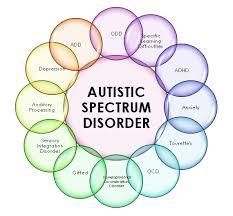
Every person develops in their own unique way. Some children begin speaking early, while others take more time to develop language skills. Some enjoy social activities and easily connect with others, while some prefer quiet routines, solo play, or structured environments.
Small differences in growth and development are normal. However, certain patterns in communication, behavior, learning, or social interaction may suggest developmental differences that need further attention.
This is where autism tests can help.
Autism tests are tools used to identify signs linked to autism spectrum disorder, also known as ASD. These tests help parents, caregivers, teachers, and healthcare professionals better understand how a child or adult communicates, learns, behaves, and interacts with the world.
Autism testing is not about placing a label on someone. Instead, it helps identify developmental differences early so individuals can receive proper support and guidance.
In this blog, you will learn what autism test are, how they work, and how they help identify developmental differences.
What Is Autism?
Autism, or autism spectrum disorder, is a neurodevelopmental condition.
This means autism affects how the brain develops and processes information.
Autism can influence:
- Communication
- Social interaction
- Learning style
- Behavior patterns
- Sensory processing
- Emotional regulation
Autism is called a spectrum because it affects each person differently.
Some autistic individuals need daily support in many areas of life.
Others live independently, work successfully, and manage daily tasks with minimal support.
Autism is not an illness or disease.
It is a developmental difference.
This means autistic people experience and respond to the world in unique ways.
Common Signs of Autism
Autism signs can look different from person to person.
Some common signs include:
- Delayed speech or language skills
- Limited eye contact
- Difficulty understanding social cues
- Repetitive movements or behaviors
- Strong preference for routines
- Intense focus on certain topics or interests
- Sensitivity to sound, light, smell, or texture
- Difficulty with changes or transitions
Some people show clear signs early in life.
Others may have subtle traits and get identified later.
Autism can appear differently in children, teenagers, and adults.
What Is an Autism Test?
An autism test is a screening or assessment used to identify behaviors and developmental patterns linked to autism.
An autism test may include:
- Questionnaires
- Developmental checklists
- Behavioral observations
- Interviews
- Standardized autism assessments
Autism tests help answer important questions such as:
- Does this child show signs of autism?
- Are these developmental differences linked to autism?
- Should this person receive a full professional evaluation?
Some autism tests are available online as screening tools.
Others are completed by trained professionals.
How Autism Tests Work
Autism tests collect information about development, communication, behavior, and social functioning.
The testing process often includes several steps.
1. Developmental Screening
Developmental screening is often the first step.
This is a quick process used to check for possible developmental differences.
Parents or caregivers may answer questions such as:
- Does your child respond to their name?
- Does your child point to objects?
- Does your child make eye contact?
- Does your child imitate actions?
These questions help identify possible early signs.
Screening does not diagnose autism.
It simply shows whether further evaluation may be helpful.
2. Behavioral Observation
Behavioral observation is an important part of autism testing.
A trained professional watches how the person behaves in different situations.
They may observe:
- Social interaction
- Communication style
- Emotional responses
- Play behavior
- Repetitive actions
For children, observation may involve toys, games, and interactive activities.
For adults, observation often happens through conversation or structured tasks.
Observation gives professionals direct insight into developmental patterns.
3. Communication Assessment
Communication differences are common in autism.
Autism testing often evaluates:
- Speech development
- Language understanding
- Conversation ability
- Nonverbal communication
Professionals may assess whether someone has difficulty with:
- Starting conversations
- Understanding tone or facial expressions
- Maintaining back-and-forth communication
Some autistic individuals may speak early but still struggle with social communication.
Communication testing helps identify these differences.
4. Social Skills Assessment
Autism affects social interaction in many ways.
Testing often explores social development.
Professionals may assess:
- Eye contact
- Facial expressions
- Understanding emotions
- Peer interaction
- Social awareness
For example, they may observe whether a child:
- Shares interests
- Responds socially
- Engages in group play
Social differences are a major part of autism identification.
5. Sensory Processing Evaluation
Many autistic individuals experience sensory differences.
Autism testing may include questions such as:
- Is the person sensitive to loud sounds?
- Do certain clothing textures cause discomfort?
- Does the person avoid crowded or bright environments?
Sensory processing differences may affect:
- Daily routines
- School performance
- Emotional comfort
Understanding sensory needs is an important part of autism support.
6. Developmental History Review
Professionals often review developmental history.
Parents or caregivers may answer questions such as:
- When did your child begin talking?
- How did your child play as a toddler?
- Did your child respond socially in early development?
Developmental history helps identify long-term patterns.
Autism signs often begin early, even if they are not recognized immediately.
Standardized Autism Tests
Professionals often use research-based autism assessments.
These tools improve testing accuracy.
Autism Diagnostic Observation Schedule (ADOS)
ADOS is one of the most widely used autism assessments.
It evaluates:
- Communication
- Social interaction
- Imagination
- Repetitive behaviors
ADOS is commonly used for both children and adults.
Autism Diagnostic Interview-Revised (ADI-R)
ADI-R is a detailed interview often completed with parents or caregivers.
It focuses on:
- Early childhood development
- Communication history
- Social functioning
Modified Checklist for Autism in Toddlers (M-CHAT)
M-CHAT is a screening tool designed for toddlers.
It helps identify early autism signs.
Childhood Autism Rating Scale (CARS)
CARS measures autism-related behaviors and symptom severity.
These tools help professionals make informed decisions.
How Autism Tests Help Identify Developmental Differences
Autism tests do much more than simply check for autism.
They help identify important developmental patterns.
Identify Communication Differences
Autism tests can identify communication differences such as:
- Speech delays
- Language processing differences
- Social communication challenges
This helps professionals understand how someone communicates best.
Detect Social Development Differences
Testing identifies social differences in areas such as:
- Peer relationships
- Emotional understanding
- Social awareness
This helps guide social development support.
Identify Learning Differences
Autistic individuals often have unique learning styles.
Testing may reveal strengths such as:
- Strong visual learning
- Excellent memory
- Pattern recognition
- Detail-focused thinking
Understanding learning style improves educational planning.
Recognize Sensory Differences
Autism tests often highlight sensory sensitivities.
These may include sensitivity to:
- Noise
- Bright lights
- Texture
- Smell
Recognizing these differences can improve daily comfort.
Support Emotional Understanding
Autism testing can also explain emotional challenges.
Examples include:
- Difficulty managing overwhelm
- Emotional shutdowns
- Trouble handling transitions
This helps families and educators better support emotional needs.
Why Early Autism Testing Matters
Early identification is very important.
Benefits of early autism testing include:
- Earlier support services
- Better communication development
- School accommodations
- Family education
- Improved coping strategies
Early intervention often leads to better long-term outcomes.
The earlier developmental differences are understood, the sooner support can begin.
Autism Testing for Adults
Autism testing is not only for children.
Many adults seek autism testing later in life.
Adults may explore autism because they:
- Feel socially different
- Experience sensory overload
- Prefer routines
- Struggle with social communication
Adult testing can provide:
- Self-understanding
- Emotional clarity
- Workplace support
- Improved mental health awareness
Many adults feel relief after finally understanding their lifelong differences.
Online Autism Tests vs Professional Autism Testing
Many people start with online autism tests.
Benefits of online testing include:
- Easy access
- Privacy
- Convenience
- Fast results
However, online tests have limitations.
They cannot:
- Diagnose autism
- Replace clinical evaluation
- Provide personalized support recommendations
Professional testing is more accurate because it includes:
- Observation
- Interviews
- Standardized tools
- Clinical expertise
Professional assessment is the best option for diagnosis.
What Happens After an Autism Test?
The next step depends on the results.
If Autism Is Suggested
A professional may recommend:
- Full autism evaluation
- Therapy support
- Educational planning
If Autism Is Diagnosed
A diagnosis can help someone access support such as:
- Speech therapy
- Occupational therapy
- Social skills support
- School or workplace accommodations
Diagnosis helps guide useful resources.
If Autism Is Not Identified
Sometimes symptoms may relate to other conditions such as:
- ADHD
- Anxiety
- Learning disabilities
- Speech delays
A professional can help identify the correct explanation.
Conclusion
Autism tests are important tools for identifying developmental differences in communication, behavior, social interaction, learning, and sensory processing.
These tests help children and adults better understand how they experience and interact with the world.
Autism testing is not about labeling or limiting someone.
It is about improving understanding, identifying support needs, and helping individuals thrive.