
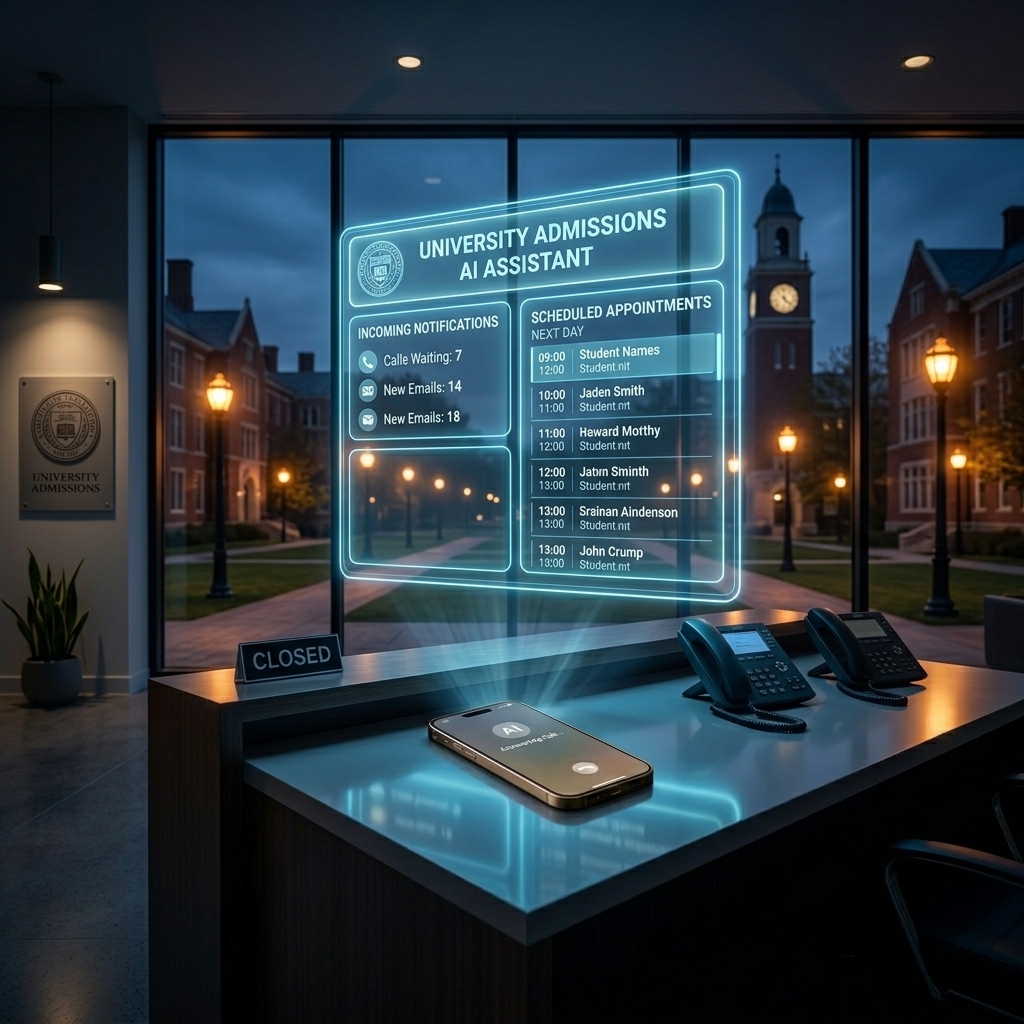
Here is a question most business owners never think to ask. How much revenue did your institute walk away from last month because nobody answered the phone? Not a rhetorical question. An actual number exists, and you just cannot see it because missed calls leave no trace. No record. No name. No follow-up. The prospective student who called on a Wednesday afternoon to ask about your enrollment process, heard voicemail, and registered somewhere else by Thursday morning simply vanishes from your world without ever appearing in it. That is the nature of the problem. And it is why the phone, the one channel every institute already has, remains the most consistently underused revenue asset in the building.
Everyone Is Chasing Digital. The Phone Is Being Ignored.
Marketing budgets at most educational institutions have shifted heavily toward digital over the past several years. Social media ads. Google campaigns. Retargeting. SEO. These are all legitimate investments, and they do drive inquiries. But here is what happens after those campaigns do their job. An interested person sees your ad. They visit your website. They read through your programs. They have a specific question about fees, about schedules, and about whether a particular course is still accepting registrations. And they pick up the phone because that question feels too important to leave in a contact form and wait a day for a reply. If that call goes unanswered, the entire cost of acquiring that lead, the ad spend, the content, the targeting, produces nothing. The funnel worked. The phone failed. This happens at institutes constantly. The marketing team does not see it. The admissions team does not track it. It just bleeds quietly in the background while everyone focuses on click-through rates and form submissions.
What the Phone Actually Represents
Think about the profile of a person who calls rather than filling out a form. They are further along in their decision than a casual website visitor. They have already done some research. They have a specific question, which means they are close to making a choice. The fact that they are calling at all suggests a level of intent that most digital leads take days or weeks to reach. These are your warmest inquiries. And they are being routed to voicemail. The phone is not a legacy channel that students and parents have moved away from. For high-consideration decisions like enrollment, course selection, career programs, and admissions requirements, people still pick up the phone. They want a real answer from someone who knows what they are talking about. A chatbot on your website does not satisfy that need. A callback promise does not either, not when they are comparing three institutes simultaneously, and the one that responds first earns the trust.
Why the Existing Setup Cannot Keep Up
Most institutes handle inbound calls through a front desk or an admissions coordinator. When that person is available and the call volume is manageable, it works reasonably well. The problem is that availability and call volume rarely cooperate with each other. Peak inquiry periods, when a new term is approaching, when results are announced, and when an ad campaign generates a spike, are exactly when the front desk is already overwhelmed. The calls that need to be captured most urgently are arriving at the moment when capturing them is hardest. After hours is a separate issue entirely. Prospective students are often researching in the evenings. Parents of younger students make calls after their own workday ends. Anyone calling after 5 PM hits a recording. That recording tells them, essentially, that their question can wait until tomorrow. Often, their enrollment cannot. Hiring more staff is the instinctive solution. But it does not scale cleanly. More staff means more overhead, more training time, and more variability in how calls are handled. And it still does not solve the after-hours problem without adding a night shift that most institutes cannot justify financially.
This Is Where the Technology Conversation Starts Making Sense
A 24/7 AI Front Desk built for educational institutes changes the structural reality of this problem in a straightforward way. Every call gets answered. Not routed to voicemail. Not placed in a queue. Answered immediately, with a natural voice and the specific knowledge that a prospective student or parent needs to move forward. The system knows your programs. It knows your admission requirements, your fee structures, your term dates, your campus locations, and your contact hierarchy. When someone calls at 8:30 PM asking whether the evening MBA program still has seats available for the upcoming intake, it gives them an accurate answer. When someone wants to schedule a campus visit, it books the appointment and sends a confirmation. When someone has a question that genuinely requires a human advisor, it escalates clearly and logs everything that was discussed. What this produces on the intake side is a meaningfully higher rate of captured inquiries, not because more people are calling, but because fewer calls are disappearing before they convert.
The Difference Between Answering and Engaging
There is a version of this that just answers and routes. That is better than voicemail, but not by as much as you might think. The better version engages. It handles the actual question rather than just acknowledging it. It moves the conversation forward toward an appointment, toward an enrollment inquiry, toward a committed next step rather than simply taking a message. For institutes, this distinction matters a lot. The parent who calls wanting to understand the scholarship process does not want to be told that someone will call them back. They want the information. A system trained on your institute’s actual scholarship criteria, application timelines, and eligibility requirements can give that answer. That conversation ends with the caller feeling informed and more likely to proceed. The callback version ends with the caller still having questions and still comparison shopping.
The Outbound Side of the Equation
Capturing inbound calls is half the picture. The other half is what happens after an inquiry arrives through any channel. Prospective students who submit a form, send a WhatsApp message, or register interest through an event rarely convert on the first touch. The research phase for an educational decision can span weeks. During that time, consistent and timely follow-up is what keeps your institute in consideration and moves the prospect toward a decision. Human admissions teams struggle with this at scale. Not because they are not capable, but because the volume is too high and the timing requirements are too precise. A lead that comes in on a Friday evening needs follow-up before Monday morning. A prospective student who attended an open day and expressed interest needs a follow-up within 24 hours, while the experience is still fresh. These windows close faster than most manual processes can respond. The AI Voice Agent for Institutes handles outbound follow-up at the speed and consistency that no human team can sustain without burning out. Every inquiry gets a timely response. Every interested prospect gets a follow-up call or message at the right interval. Every student who was close to enrolling but went quiet gets a re-engagement sequence designed to bring them back into the conversation. This kind of consistent pipeline management is what separates institutes with strong enrollment numbers from those that wonder why their inquiry volume looks good, but their actual registrations are flat.
What Institutes Typically See After Implementation
The immediate impact is usually on after-hours capture. Inquiries that were previously lost between 5 PM and 9 AM start converting into scheduled appointments. That alone tends to justify the investment quickly for most institutes. The medium-term impact shows up in lead-to-enrollment conversion rates. When follow-up is consistent and timely, more prospects actually make it through the decision process. The funnel stops leaking at the stages where human inconsistency was causing a drop-off. The longer-term impact is on how the admissions team operates. When routine calls and follow-ups are handled automatically, counselors can spend their time on the conversations that actually require human judgment. The student who needs reassurance. The parent with a complex financial aid situation. The inquiry needs a campus walkthrough to close. The quality of those interactions tends to go up when the people having them are not also managing a backlog of callbacks.
A Practical Note on Getting Started
The most common hesitation is about integration. Will this connect with the institute’s existing CRM or student information system? Will it match the tone and language the institution uses in its communications? Most current platforms built for educational settings are designed to integrate with standard CRM tools and can be configured to reflect your institution’s specific voice, program names, and policies. Setup typically takes a matter of days rather than weeks. The system learns your institution, not the other way around. The second hesitation is about the caller experience. The concern is that prospects will feel dismissed if they realize they are speaking with an AI. The honest answer is that a well-configured system, one that actually knows your programs and can have a real conversation, does not produce that reaction. Callers who get accurate and helpful answers do not tend to ask whether they reached a human. They simply move forward.
The Bigger Picture
The phone has always been a direct line between a motivated prospect and your institution. That has not changed. What has changed is the expectation on the other end of the line that someone will answer, that they will know what they are talking about, and that the conversation will be worth having. Meeting that expectation around the clock, across all inquiry volumes, without putting the entire burden on a front desk team that has a hundred other responsibilities, that is what this technology actually solves. Your phone is already ringing. The question is how many of those calls are turning into students, and how many are turning into someone else’s students.